
Filters
Documents containing cancer
Showing 25 of 64 items meeting your criteria.
| Type | Category | Supplier | ||
|---|---|---|---|---|
 | Cancer remains one of the most active areas of biomedical research, driving continuous advances in immunotherapy, targeted therapeutics, biomarker discovery, and precision medicine. To support cancer research from basic biology to translational studies, Abnova offers a comprehensive portfolio of antibodies, recombinant proteins, and ELISA kits covering key oncology pathways and targets.
This catalog highlights antibodies, recombinant proteins, and ELISA kits supporting research in Immuno-Oncology, Cell Therapy, Targeted Therapy, Biomarkers, DNA Repair, Tumor Microenvironment, Cell Signaling, Cancer Stem Cells, Tumor Suppressors, Cell Death, Hematologic Oncology, and Cancer Metabolism. Our products are designed to support studies in tumor biology, immune regulation, therapeutic target validation, biomarker development, and drug discovery. | |||
Documents | Cancer | Abnova Corporation | ||
 | TissueReady PLUS offers a simple solution that preserves the viability and quality of fresh tissue at ambient temperatures, increasing shelf life, enabling shipment, enhancing the
flexibility of workflows and improving the quality of screening and model generation from these tissues. | |||
Documents | Sample Preservation | Atelerix | ||
 | T he dense stromal reaction in PDAC, rich in collagen, profoundly impacts tumor progression and drug delivery. Aberrant collagen remodeling is a hallmark of this aggressive cancer. Collagen Hybridizing Peptides (CHPs), with their unique ability to target denatured collagen, offer a powerful tool to visualize and quantify these critical structural changes within the PDAC microenvironment. This technology can enhance our understanding of stromal biology and potentially identify novel therapeutic strategies. | |||
Documents | Peptides | 3Helix | ||
 | ImmunoMetrix™ is a premier line of monoclonal antibodies originated and rigorously characterised by the Clinical Proteomic Tumour Analysis Consortium (CPTAC) standards. By combining the CPTACs unrivalled validation standards with Leincos 30+ years of manufacturing excellence, we provide the most reliable affinity reagents available for cancer research. | |||
Documents | Antibodies | Leinco Technologies | ||
 | TargetMol offers hundreds of products for disease modelling, covering a wide range of disease models including cancer, neurological disorders, immune and inflammatory conditions, endocrine and metabolic diseases, as well as cardiovascular diseases. | |||
Documents | Catalogue | TargetMol | ||
 | PD-1 (Programmed Cell Death Protein 1; CD279) is a type I transmembrane protein belonging to the CD28/CTLA-4 family of immune receptors. PD-L1 (B7-H1; CD274) and PD-L2 (B7-DC;
CD273) are immuno-coinhibitory ligands of the B7 family binding to PD-1. The PD-1/PD-L1 or PD-L2 signaling pathway is a negative regulatory mechanism that inhibits T cell proliferation and cytokine production. Blockade of the PD-1/PD-L1 interaction enhances antitumor immunity. The PD-1 pathway plays a major role in the inhibition of self-reactive T cells and protection against autoimmune diseases. PD-1 and PD-L1 also exist as soluble forms. Elevated levels of soluble PD-1 (sPD-1) are shown in rheumatoid arthritis, skin sclerosis and autoimmune hepatitis. Levels of sPD-L1 are increased in the plasma of cancer patients as well as in cerebrospinal fluid of gliomas. sPD-L1 is a biomarker of poor survival in patients with B cell lymphoma, renal cell carcinoma, metastatic melanoma or lung cancer and is associated with advanced tumor stages. | |||
Documents | Immunology | AdipoGen Life Sciences | ||
 | Glucocorticoid-induced TNFR-related protein (GITR; CD357; TNFRSF18) is an activating receptor on the surface of T cells and other immune cells, binding to its ligand GITRL (TNFSF18). Once exposure to tumor antigen activates a T cell, the number of GITR receptors on its surface increases. On the activated T cell, GITR acts as a co-stimulatory receptor, meaning that it is a receptor whose signaling enhances cell reproduction and the generation of cancer-killing activity. Activation of GITR signaling can also help to enhance immunity through the activation of cytotoxic T cells and inhibition of Treg activity. The GITR/GITRL pathway can shift the immune balance toward anti-tumor immunity by strengthening effector T cell responses and weakening tumor-protective regulatory networks but also play a dual role in autoimmunity. While its activation can help control tumor growth, excessive stimulation may promote autoreactive T cell activity, aggravating autoimmune inflammation. | |||
Documents | Immunology | AdipoGen Life Sciences | ||
 | Elabscience® has established advanced antibody development platforms that generate over 17,000 high-quality antibodies. Our antibody products support research in life science and medicine, including cell biology, cancer, neurobiology, epigenetics, infectious diseases, and immunology. | |||
Documents | Antibodies | Elabscience | ||
 | Discover AMDs diagnostic assays for STDs, genetic biomarkers, respiratory panels, infectious diseases, cancer biomarkers, animal health and food safety. | |||
Documents | PCR Kits | Advanced Molecular Diagnostics (AMD) | ||
 | Consistent and reliable antibodies targeting mouse immune checkpoints and related proteins are essential for advancing cancer research. Achieving lot-to-lot reproducibility is crucial for maintaining the integrity of scientific studies. Leinco Technologies offers a range of functional grade antibodies and is known for our exceptional lot-to-lot reproducibility, minimal endotoxin levels, and absence of detectable impurities. With these high-quality antibodies, researchers can confidently conduct in vivo studies to further our understanding of cancer immunotherapy. | |||
Documents | Cancer | Leinco Technologies | ||
 | Leinco Technologies offers high-purity research-grade biosimilar antibodies with the same specifications as many therapeutic antibodies. Therapeutic antibodies are widely used for the treatment of diseases, including cancer and autoimmunity. | |||
Documents | Antibodies (Biosimilars) | Leinco Technologies | ||
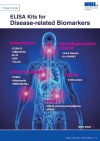 | MBL provides ELISA kits for inflammation, cancer, ageing, lifestyle diseases and neurodegenerative diseases. | |||
Documents | ELISA | Medical & Biological Laboratories (MBL) | ||
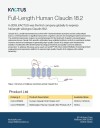 | Claudin 18.2, a small transmembrane protein with 4 transmembrane domains and two extracellular loops, is overexpressed in a significant proportion of gastric cancers and oesophagal adenocarcinomas. In 2018, KACTUS was the first company globally to express full-length wild-type Claudin 18.2. | |||
Documents | Proteins | KactusBio Inc. | ||
 | TargetMol is always at the forefront of cancer-focused research. We provide comprehensive resources, including anti-tumor related small molecules, compound libraries, recombinant proteins, and antibodies to support antitumor drug discovery. We also provide computer-aided drug discovery (CADD) services tailored for your research on cancer-related drug screening. | |||
Documents | Cancer | TargetMol | ||
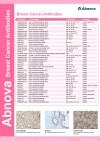 | Abnova provides a range of antibodies for Breast Cancer. | |||
Documents | Cancer | Abnova Corporation | ||
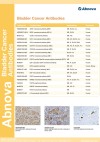 | Abnova provides a range of antibodies for bladder cancer. | |||
Documents | Cancer | Abnova Corporation | ||
 | Gastrointestinal diseases mainly refer to general inflammatory gastrointestinal diseases, peptic ulcer, gastric cancer, esophageal cancer, colorectal cancer andirritable bowel syndrome. Cloud-Clone provides a range of products for Gastroenterology. | |||
Documents | Gastro | Cloud-Clone Corp. | ||
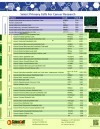 | ScienCell provides primary cells, cell-based assays and GeneQuery qPCR Arrays for cancer research. | |||
Documents | Cancer | Sciencell | ||
 | ||||
Documents | Cancer | Medical & Biological Laboratories (MBL) | ||
 | Elabscience provides a range of ELISA Kits for Cancer research. | |||
Documents | Cancer | Elabscience | ||
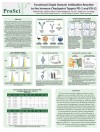 | Immune checkpoint antibodies are at the forefront of novel biological treatments for cancers and other diseases. Here we present data on the development of both mouse monoclonal antibodies (mAbs) and camelid single domain antibodies (sdAbs) against the immune checkpoint regulators PD-1 and PD-L1. | |||
Documents | Immunology | ProSci | ||
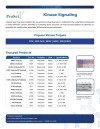 | Kinases have long been targeted by researchers in drug discovery to understand the underlying mechanisms of many different cancers. Blocking or activating these enzymes can lead to perturbations in pathways responsible for proliferation, apoptosis, differentiation and metastasis. | |||
Documents | Cancer | ProSci | ||
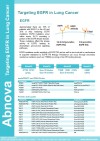 | Approximately there are 10% of patients with NSCLC in the US and 35% in Asia harboring EGFR mutations. EGFR mutations occur within exons 18–21 encoding a portion of the EGFR kinase domain. These mutations affect the kinase activity of EGFR, leading to downstream pro-survival signaling pathways.
EGFR mutations confer sensitivity of EGFR TKI and as well as are involved in mechanisms of acquired resistance to EGFR TKI therapy. Resistance can occur through secondary resistance mutations (such as T790M) occurring in the ATP-binding domain. | |||
Documents | Cancer | Abnova Corporation | ||
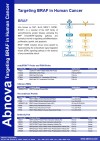 | Also known as NS7; B-raf; BRAF1; RAFB1; B-RAF1, is a member of the RAF family of serine/threonine protein kinases activating the MAP kinase/ERK-signaling pathway and normally involved in regulating cell differentiation, proliferation, growth, and apoptosis. BRAF V600E mutation drives tumor growth by hyperactivating the extracellular signal regulated kinase (ERK) signaling pathway in the absence of any extracellular stimuli. | |||
Documents | Cancer | Abnova Corporation | ||
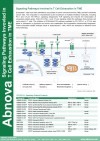 | Exhausted T cells have been identified to accumulate in tumour microenvironment (TME) and fail to eliminate cancer cells. The exhaustion is characterised by the expression of multiple inhibitory molecules, including PD-1 and CTLA4. PD-1/PD-L1 signaling antagonises TCR signaling and induces the transcription of exhaustion-related genes. Both PD-1/PD-L1 and CTLA4 signaling inhibit the pathways that promote cell cycle arrest in T cells. The inhibition of PI3K/Akt/mTOR pathway mediated by PD-1/PD-L1 or CTLA4 also leads to decreases in glycolysis and amino acid metabolism and suppresses mitochondrial biogenesis. These exhaustion-related changes result in dysfunctional T cells, which are obstacles to effective tumour immunotherapy. | |||
Documents | Cancer | Abnova Corporation | ||