
Filters
Documents
Showing 25 of 751 items meeting your criteria.
| Type | Category | Supplier | ||
|---|---|---|---|---|
 | ProSci is the leading supplier in antibodies and proteins for cytokine research. Our list includes interferons (IF), interleukins (ILs), tumor necrosis factor (TNF), chemokines, colony stimulating factors (CSFs), and growth factors. | |||
Documents | COVID-19 | ProSci | ||
 | ProSci Inc. has developed several new classes of reagents that can be used to study the actions of multiple immune checkpoint proteins such as CTLA-4, PD-1, and its ligands PD-L1 and PD-L2. These classes of products included highly validated Risk Free™ mouse monoclonal antibodies (mAbs), llama single domain antibodies, rabbit polyclonal antibodies, as well as recombinant proteins, tissue and cell slides and lysates. These products should prove useful in basic research, diagnostics, and drug development in the field of cancer immunotherapy. | |||
Documents | Immunology | ProSci | ||
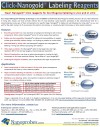 | New! Nanogold® Click reagents for biorthogonal labelling in vivo and in vitro | |||
Documents | Nanoparticles | Nanoprobes | ||
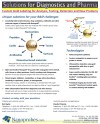 | Nanoprobes Custom Services provides solutions for diagnostics and pharma. They provide custom Gold Labeling for Analysis, Testing, Detection and New Products. | |||
Documents | Nanoparticles | Nanoprobes | ||
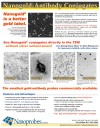 | Nanogold® is a better gold label. The 1.4nm Nanogold particle is not absorbed to proteins like conventional colloidal gold: it is bonded at specific sites that do not affect immunoreactivity. | |||
Documents | Nanoparticles | Nanoprobes | ||
 | Pathways that can be studied with Enogene's products | |||
Documents | Antibodies | Enogene Biotech | ||
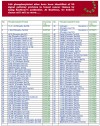 | EnoGene's IHC Phospho-antibodies. 166 phosphorylated sites have been identified of 95signal pathway proteins in breast cancer tissues byusing EnoGene’s antibodies. At EnoGene, we believetissue will tell us more. | |||
Documents | Antibodies | Enogene Biotech | ||
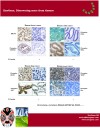 | EnoGene's IHC Antibodies | |||
Documents | Antibodies | Enogene Biotech | ||
 | EnoGene™ aims to be a leading manufacturer of quality antibody products for the biotechnology, animal and human pharmaceutical industries. EnoGene is one of the most advanced established biotechnology companies with core technologies in high efficiency of antibody production and large scale antibody purification. EnoGene currently manufactures and markets antibody products for use in life science research, biopharmaceutical manufacturing and diagnostics. | |||
Documents | Enogene Biotech | |||
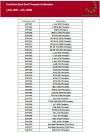 | EnoGene Phospho-antibodies | |||
Documents | Antibodies | Enogene Biotech | ||
 | Vitro Biopharma provides high quality commercialized cell lines, media, stem cell products & stem cell technology. | |||
Documents | Primary Cells | Vitro Biopharma | ||
 | Demand for antibodies against dsRNA continues to grow with the success of mRNA vaccines in the fight against COVID-19. Current mRNA technology, where mRNA is transcribed from cloned DNA by the T7 RNA polymerase, results in the creation of dsRNA impurities. To monitor the removal of this unwanted dsRNA by-product before use, Scicons antibodies are the gold standard. | |||
Documents | Antibodies | Nordic MuBio | ||
 | Nordic-MUbio is dedicated to helping veterinary scientists advance their understanding of animal immunology, helping to safeguard everything from domestic pets to livestock in health and disease. | |||
Documents | Antibodies | Nordic MuBio | ||
 | Antibodies and Reagents that Answer Real Needs. FIX&PERM, BrdU, SPARC, Chicken IgY, Custom Chicken IgY Services. | |||
Documents | Antibodies | Nordic MuBio | ||
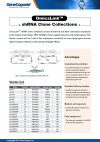 | OmicsLinkTM shRNA clone collections consist of lentiviral and other mammalian expression vector-based small hairpin RNA (shRNA) clones against genome-wide target genes from human, mouse and rat. A set of four expression constructs for every target gene ensures high knockdown efficiency with minimal off-target effects. | |||
Documents | Clones | GeneCopoeia | ||
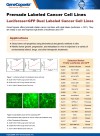 | Luciferase + GFP Dual Labeled Cancer Cell Lines
GeneCopoeia offers premade stable cancer cell lines with dual labels (luciferase + GFP). They are ready to use and express high levels of luciferase and GFP. | |||
Documents | Cell lines | GeneCopoeia | ||
 | GeneCopoeia offers genome-edited cell lines that carry diverse hotspot mutations commonly seen in the cancer signaling pathways including EGFR, KRAS and BRAF, in both homozygous and heterozygous genotypes | |||
Documents | Cell lines | GeneCopoeia | ||
 | Designed for microRNA (miRNA) target identification and functional validation of predicted targets, or to study the regulatory effect of miRNA on target genes. | |||
Documents | miRNA | GeneCopoeia | ||
 | For in vitro and in vivo applications | |||
Documents | Lentiviral particles | GeneCopoeia | ||
 | Using a secreted and robust Gaussia Luciferase (GLuc) as the reporter, GeneCopoeia GLuc-ONTM promoter clones are designed to detect the real-time activities of over 20,000 human promoters using live-cell assays. | |||
Documents | Clones | GeneCopoeia | ||
 | GeneCopoeia, Inc. a U.S.-based functional genomics company founded in 1999, develops cutting-edge products and services for genomics, proteomics, and molecular and cellular biology. With emphasis on innovative R&D and superior product quality, GeneCopoeia serves the needs of biomedical scientists in academic research, and R&D of pharmaceutical and diagnostic products in their pursuit of discoveries and innovations. | |||
Documents | Molecular Biology | GeneCopoeia | ||
 | GeneHero™ Cas9 Stable Cell Lines
Reporter-Gene Labeled Cancer Cell Lines
OncoSpot™ Cancer Biomarker Mutant Cell Lines | |||
Documents | Cell lines | GeneCopoeia | ||
 | Stable Cas9 integration minimizes the need for co-transfection or co-transduction of sgRNAs. Ideal for high-throughput sgRNA applications.
Cas9 functionally validated using the IndelCheck™ T7 endonuclease Endonuclease I assay.
Single clone isolation provides consistent, high-level Cas9 expression in a uniform genetic background.
Compatible with GeneCopoeia Genome-CRISP™ sgRNA clones, sgRNA libraries, and donor clones. | |||
Documents | Stable Cell Lines | GeneCopoeia | ||
 | GeneCopoeia's OmicsArray™ antigen protein microarrays are engineered for several powerful applications, including autoantibody detection, biomarker profiling, and characterization of protein-molecule interactions. Antigen protein microarrays enable parallel detection of antibodies or other biomarkers present in patient samples for autoimmune diseases including rheumatoid arthritis, muscular dystrophy, systemic lupus erythematosus, and type 1 diabetes as well as pathogen antibodies. | |||
Documents | Antigen microarrays | GeneCopoeia | ||
 | Products available:
All-in-One SYBR Green qPCR Mix
All-in-One qPCR Validated Primers
All-in-One First-Strand cDNA Synthesis Kit | |||
Documents | GeneCopoeia | |||