

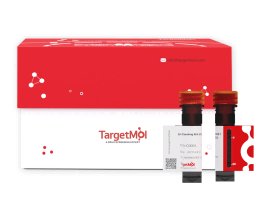
Mitochondrial Membrane Potential Detection Kit (JC-1)
Product Code:
TAR-C0174
TAR-C0174
Product Group:
Staining Kits
Staining Kits
Supplier:
TargetMol
TargetMol
Regulatory Status:
RUO
RUO
Shipping:
Cool pack
Cool pack
Storage:
-20°C
-20°C

No additional charges, what you see is what you pay! *
Stay in control of your spending. These prices have no additional charges to UK mainland customers, not even shipping!
* Rare exceptions are clearly labelled (only 0.14% of items!).
* Rare exceptions are clearly labelled (only 0.14% of items!).
Multibuy discounts available! Contact us to find what you can save.
This product comes from: Austria.
Typical lead time: 10-14 working days.
Contact us for more accurate information.
Typical lead time: 10-14 working days.
Contact us for more accurate information.
- Further Information
- Documents
- Show All
Further Information
Bioactivity:
The Targeted Mol Mitochondrial Membrane Potential Detection Kit (JC-1) is a fluorescent probe specifically designed for rapid detection of dynamic changes in mitochondrial membrane potential (δPSI m). Mitochondrial membrane potential (δ PSI m) refers to the potential difference on both sides of the inner membrane of mitochondria. Its formation and maintenance are crucial for mitochondrial energy metabolism, material transport, and cell survival, and are important indicators reflecting mitochondrial function.
JC-1 is a lipophilic cationic fluorescent probe commonly used for mitochondrial membrane potential detection, with the full name of 5,5 ', 6,6' - tetrachloro-1,1 ', 3,3' - tetraethylbenzimidazole carbonyl cyanine iodide. JC-1 can freely penetrate the cell membrane, and its aggregation state changes under different mitochondrial membrane potential conditions. The principle of detecting mitochondrial membrane potential is that when the mitochondrial membrane potential is high, JC-1 is driven into the mitochondrial matrix through transmembrane potential, and aggregates (J-aggregates) are formed due to the high concentration environment in the matrix. At this point, the interaction between JC-1 molecules changes the fluorescence characteristics, and upon excitation, it emits red fluorescence (with a maximum excitation wavelength of 585 nm and a maximum emission wavelength of 590 nm). When the mitochondrial membrane potential decreases (such as in the early stage of cell apoptosis), JC-1 cannot aggregate in the matrix and exists in monomeric form. Upon excitation, it emits green fluorescence (maximum excitation wavelength 514 nm, maximum emission wavelength 529 nm). By detecting the relative intensity ratio of intracellular red/green fluorescence, changes in mitochondrial membrane potential can be measured, which in turn reflects the state of cell apoptosis.
This reagent kit has a wide range of applications and is compatible with various sample types such as cells, tissues, and purified mitochondria. It can also be adapted to various detection instruments such as fluorescence microscopes, laser confocal microscopes, fluorescence spectrophotometers, and flow cytometers.
Purity:
99.58%