
ProSci

GNPDA2 Antibody

Product Code:
 
PSI-5061
Product Group:
 
Primary Antibodies
Supplier:
 
ProSci
Host Type:
 
Rabbit
Antibody Isotype:
 
IgG
Antibody Clonality:
 
Polyclonal
Regulatory Status:
 
RUO
Applications:
  • Enzyme-Linked Immunosorbent Assay (ELISA)
  • Immunofluorescence (IF)
  • Immunohistochemistry (IHC)
  • Western Blot (WB)
1 / 3
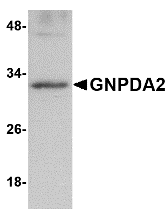
Western blot analysis of GNPDA2 in human kidney lysate with GNPDA2 antibody at 1 μg/mL.
2 / 3
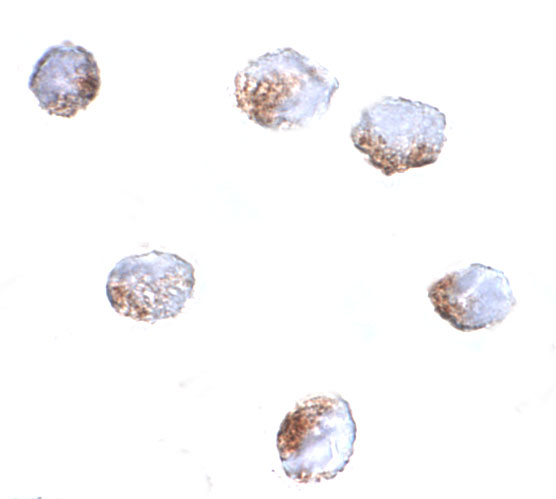
Immunocytochemistry of GNPDA2 in 293 cells with GNPDA2 antibody at 4 μg/mL.
3 / 3
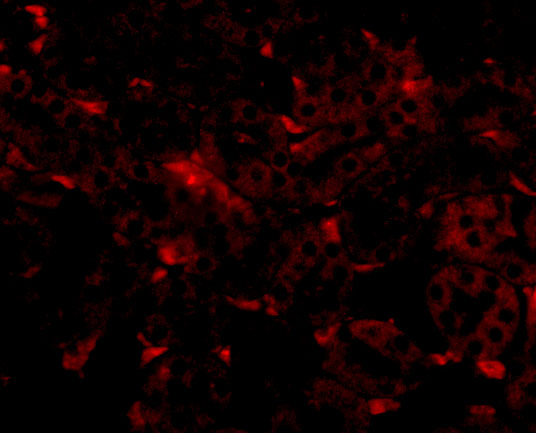
Immunofluorescence of GNPDA2 in mouse kidney tissue with GNPDA2 antibody at 20 μg/mL.

Western blot analysis of GNPDA2 in human kidney lysate with GNPDA2 antibody at 1 μg/mL.
Immunocytochemistry of GNPDA2 in 293 cells with GNPDA2 antibody at 4 μg/mL.
Immunofluorescence of GNPDA2 in mouse kidney tissue with GNPDA2 antibody at 20 μg/mL.

No additional charges, what you see is what you pay! *

CodeSizePrice
PSI-5061-0.02mg0.02mg£150.00
Quantity:
PSI-5061-0.1mg0.1mg£453.00
Quantity:
Prices exclude any Taxes / VAT
Stay in control of your spending. These prices have no additional charges to UK mainland customers, not even shipping!
* Rare exceptions are clearly labelled (only 0.14% of items!).
Multibuy discounts available! Contact us to find what you can save.
This product comes from: United States.
Typical lead time: 14-21 working days.
Contact us for more accurate information.
  • Further Information
  • Documents
  • Show All

Further Information

Additional Names:
GNPDA2 Antibody: GNP2, SB52, GNP2, Glucosamine-6-phosphate isomerase 2, Glucosamine-6-phosphate deaminase 2, GNPDA 2
Application Note:
GNPDA2 antibody can be used for detection of GNPDA2 by Western blot at 1 μg/mL. Antibody can also be used for immunocytochemistry starting at 4 μg/mL. For immunofluorescence start at 20 μg/mL.

Antibody validated: Western Blot in human samples; Immunocytochemistry in human samples and Immunofluorescence in mouse samples. All other applications and species not yet tested.
Background:
GNPDA2 Antibody: Glucosamine-6-phosphate deaminase (GNPDA) is an allosteric enzyme that catalyzes the reversible conversion of D-glucosamine-6-phosphate into D-fructose-6-phosphate and ammonium. GNPDA2 is the second mammalian glucosamine-6-phosphate deaminase discovered, and is closer in structure and activity to the E. coli enzyme than GNPDA1. GNPDA1 possesses greater affinity for ammonium than either GNPDA2 or the E. coli enzyme suggesting that the forward reaction of D-glucosamine-6-phosphate into D-fructose-6-phosphate and ammonium is catalyzed at a slower rate than GNPDA2.
Background References:
  • Wolosker H, Kline D, Bian Y, et al. Molecularly cloned mammalian glucosamine-6-phosphate deaminase localizes to transporting epithelium and lacks oscillin activity. FASEB J.1998; 12:91-9.
  • Zhang J, Zhang W, Zou D, et al. Cloning and functional characterization of GNPI, a novel human homolog of glucosamine-6-phosphate isomerase/oscillin. J. Cell Biochem.2003; 88:932-40.
  • Arreola R, Valderrama B, Morante ML, et al. Two mammalian glucosamine-6-phosphate deaminases: a structural and genetic study. FEBS Lett.2003; 551:63-70.
Buffer:
GNPDA2 Antibody is supplied in PBS containing 0.02% sodium azide.
Concentration:
1 mg/mL
Conjugate:
Unconjugated
DISCLAIMER:
Optimal dilutions/concentrations should be determined by the end user. The information provided is a guideline for product use. This product is for research use only.
Immunogen:
GNPDA2 antibody was raised against an 8 amino acid synthetic peptide near the carboxy terminus of human GNPDA2.

The immunogen is located within the last 50 amino acids of GNPDA2.
NCBI Gene ID #:
132789
NCBI Official Name:
glucosamine-6-phosphate deaminase 2
NCBI Official Symbol:
GNPDA2
NCBI Organism:
Homo sapiens
Physical State:
Liquid
Protein Accession #:
NP_612208
Protein GI Number:
19923881
Purification:
GNPDA2 Antibody is affinity chromatography purified via peptide column.
Research Area:
Homeostasis
SPECIFICITY:
GNPDA2 antibody is predicted to not cross-react with GNPDA1.
Swissprot #:
Q8TDQ7
User NOte:
Optimal dilutions for each application to be determined by the researcher.