ProSci

GLS2 Antibody

Product Code:
 
PSI-6217
Product Group:
 
Primary Antibodies
Supplier:
 
ProSci
Host Type:
 
Rabbit
Antibody Isotype:
 
IgG
Antibody Clonality:
 
Polyclonal
Regulatory Status:
 
RUO
Applications:
  • Enzyme-Linked Immunosorbent Assay (ELISA)
  • Immunofluorescence (IF)
  • Immunohistochemistry- Paraffin Embedded (IHC-P)
  • Western Blot (WB)
1 / 6
<strong> Figure 1 WB Validation  in Human Pancreas </strong><br>
Loading: 10 μg of lysate 
Antibodies:  GLS2, 6217, 2 μ g/mL , 1 h incubation at RT in 5% NFDM/TBST. 
Secondary: Goat Anti-Rabbit IgG HRP conjugate at 1:10000 dilution.
2 / 6
<strong>Figure 2 WB Validation  in Mouse and Rat Brain </strong><br>
Loading: 15 μg of lysate 
Antibodies:  GLS2, 6217, 1 μg/mL , 1 h incubation at RT in 5% NFDM/TBST. 
Secondary: Goat Anti-Rabbit IgG HRP conjugate at 1:10000 dilution.
3 / 6
<strong>Figure 3  Immunohistochemistry Validation of GLS2 in Human Liver</strong><br>  
Immunohistochemical analysis of paraffin-embedded human liver tissue using anti-GLS2 antibody (6217) at 1 μg/ml. Tissue was fixed with formaldehyde and blocked with 10% serum for 1 h at RT; antigen retrieval was by heat mediation with a citrate buffer (pH6). Samples were incubated with primary antibody overnight at 4˚C. A goat anti-rabbit IgG H&L (HRP) at 1/250 was used as secondary. Counter stained with Hematoxylin.
4 / 6
<strong>Figure 4  Immunohistochemistry Validation of GLS2 in Mouse Liver</strong><br>  
Immunohistochemical analysis of paraffin-embedded mouse liver tissue using anti-GLS2 antibody (6217) at 1 μg/ml. Tissue was fixed with formaldehyde and blocked with 10% serum for 1 h at RT; antigen retrieval was by heat mediation with a citrate buffer (pH6). Samples were incubated with primary antibody overnight at 4˚C. A goat anti-rabbit IgG H&L (HRP) at 1/250 was used as secondary. Counter stained with Hematoxylin.
5 / 6
<strong>Figure 5  Immunohistochemistry Validation of GLS2 in Rat Brain</strong><br>  
Immunohistochemical analysis of paraffin-embedded rat brain tissue using anti-GLS2 antibody (6217) at 2 μg/ml. Tissue was fixed with formaldehyde and blocked with 10% serum for 1 h at RT; antigen retrieval was by heat mediation with a citrate buffer (pH6). Samples were incubated with primary antibody overnight at 4˚C. A goat anti-rabbit IgG H&L (HRP) at 1/250 was used as secondary. Counter stained with Hematoxylin.
6 / 6
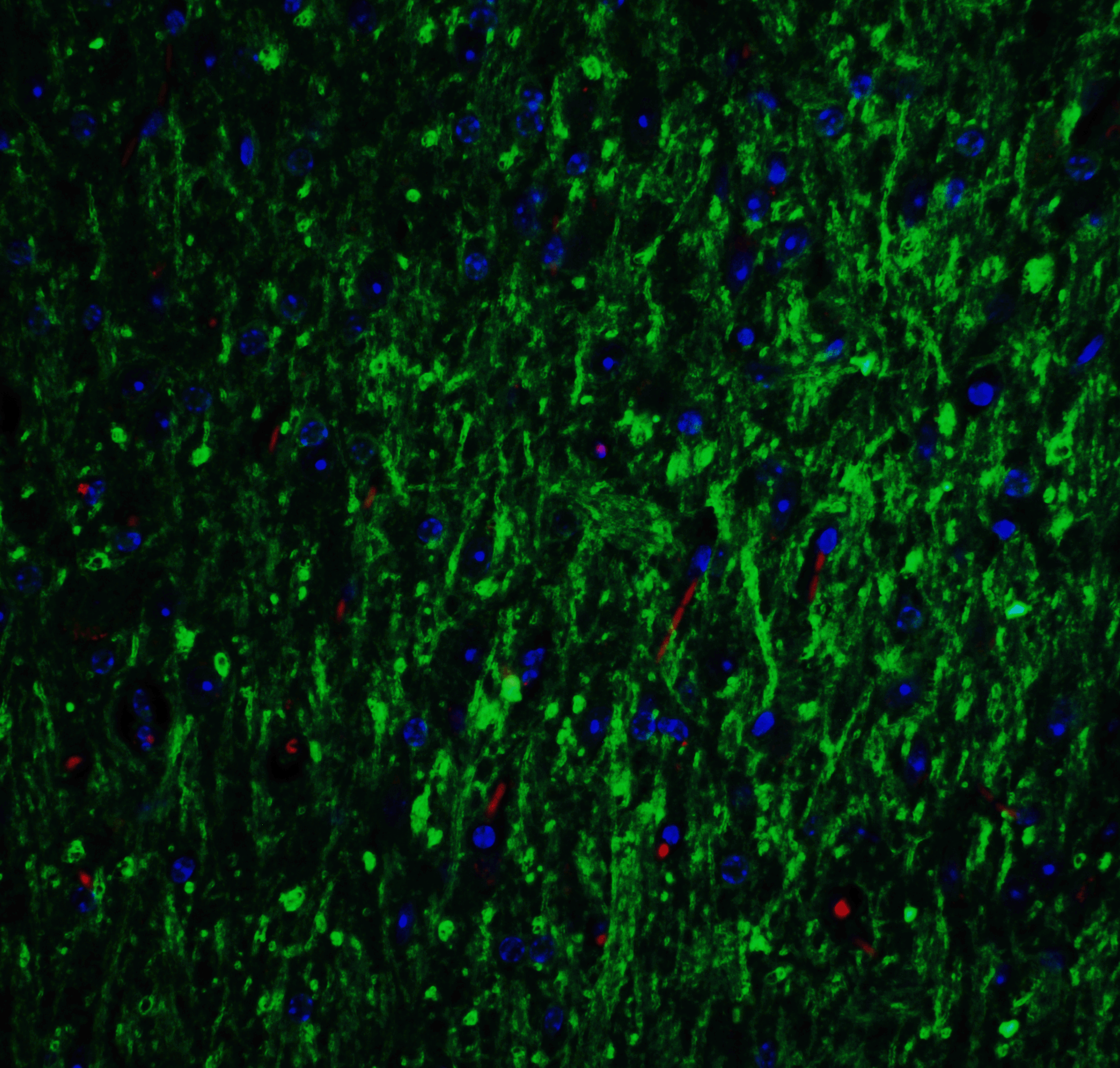
<strong>Figure 6 Immunofluorescence Validation of GLS2 in Mouse Brain</strong><br>
Immunofluorescent analysis of 4% paraformaldehyde-fixed mouse brain labeling GLS2 with 6217 at 20 μg g/mL, followed by goat anti-rabbit IgG secondary antibody at 1/500 dilution (green) and DAPI antibody (blue)

<strong> Figure 1 WB Validation  in Human Pancreas </strong><br>
Loading: 10 μg of lysate 
Antibodies:  GLS2, 6217, 2 μ g/mL , 1 h incubation at RT in 5% NFDM/TBST. 
Secondary: Goat Anti-Rabbit IgG HRP conjugate at 1:10000 dilution.
<strong>Figure 2 WB Validation  in Mouse and Rat Brain </strong><br>
Loading: 15 μg of lysate 
Antibodies:  GLS2, 6217, 1 μg/mL , 1 h incubation at RT in 5% NFDM/TBST. 
Secondary: Goat Anti-Rabbit IgG HRP conjugate at 1:10000 dilution.
<strong>Figure 3  Immunohistochemistry Validation of GLS2 in Human Liver</strong><br>  
Immunohistochemical analysis of paraffin-embedded human liver tissue using anti-GLS2 antibody (6217) at 1 μg/ml. Tissue was fixed with formaldehyde and blocked with 10% serum for 1 h at RT; antigen retrieval was by heat mediation with a citrate buffer (pH6). Samples were incubated with primary antibody overnight at 4˚C. A goat anti-rabbit IgG H&L (HRP) at 1/250 was used as secondary. Counter stained with Hematoxylin.
<strong>Figure 4  Immunohistochemistry Validation of GLS2 in Mouse Liver</strong><br>  
Immunohistochemical analysis of paraffin-embedded mouse liver tissue using anti-GLS2 antibody (6217) at 1 μg/ml. Tissue was fixed with formaldehyde and blocked with 10% serum for 1 h at RT; antigen retrieval was by heat mediation with a citrate buffer (pH6). Samples were incubated with primary antibody overnight at 4˚C. A goat anti-rabbit IgG H&L (HRP) at 1/250 was used as secondary. Counter stained with Hematoxylin.
<strong>Figure 5  Immunohistochemistry Validation of GLS2 in Rat Brain</strong><br>  
Immunohistochemical analysis of paraffin-embedded rat brain tissue using anti-GLS2 antibody (6217) at 2 μg/ml. Tissue was fixed with formaldehyde and blocked with 10% serum for 1 h at RT; antigen retrieval was by heat mediation with a citrate buffer (pH6). Samples were incubated with primary antibody overnight at 4˚C. A goat anti-rabbit IgG H&L (HRP) at 1/250 was used as secondary. Counter stained with Hematoxylin.
<strong>Figure 6 Immunofluorescence Validation of GLS2 in Mouse Brain</strong><br>
Immunofluorescent analysis of 4% paraformaldehyde-fixed mouse brain labeling GLS2 with 6217 at 20 μg g/mL, followed by goat anti-rabbit IgG secondary antibody at 1/500 dilution (green) and DAPI antibody (blue)

No additional charges, what you see is what you pay! *

CodeSizePrice
PSI-6217-0.02mg0.02mg£150.00
Quantity:
PSI-6217-0.1mg0.1mg£453.00
Quantity:
Prices exclude any Taxes / VAT
Stay in control of your spending. These prices have no additional charges to UK mainland customers, not even shipping!
* Rare exceptions are clearly labelled (only 0.14% of items!).
Multibuy discounts available! Contact us to find what you can save.
This product comes from: United States.
Typical lead time: 14-21 working days.
Contact us for more accurate information.
  • Further Information
  • Documents
  • Show All

Further Information

Additional Names:
GLS2 Antibody: GA, GLS, LGA, hLGA, GA, Glutaminase liver isoform, mitochondrial, L-glutaminase
Application Note:
WB: 0.5-2 μg/mL; IHC-P: 0.5-2 μg/mL; IHC-P/IF: 10-20 μg/mL.

Antibody validated: Western Blot in human, mouse and rat samples; Immunohistochemistry in human, mouse, and rat samples; Immunofluorescence in mouse samples. All other applications and species not yet tested.
Background:
GLS2 Antibody: Phosphate-activated glutaminase, also known as Glutaminase 2 (GLS2), was initially isolated from rat liver, although it has been shown to be expressed in other tissues. Like the functionally similar, larger kidney glutaminase, GLS2 catalyzes the hydrolysis of glutamine to stoichiometric amounts of glutamate and ammonia. Expression of GLS2 is increased by p53 under both stressed and nonstressed conditions, resulting in increased levels of glutamate and alpha-ketoglutarate, which in turn results in enhanced mitochondrial respiration and ATP generation. GLS2 also regulates antioxidant defense function in cells by increasing reduced glutathione levels and decreasing ROS-levels, suggesting that GLS2 acts as a mediator of p53's role in antioxidant defense in addition to its role in energy metabolism.
Background References:
  • Chung-Bok MI, Vincent N, Jhala U, et al. Rat hepatic glutaminase: identification of the full coding sequence and characterization of a functional promoter. Biochem. J. 1997; 324:193-200.
  • Gomez-Fabre PM, Aledo JC, del Castillo-Olivares A, et al. Molecular cloning, sequencing and expression studies of the human breast cancer cell glutaminase. Biochem. J. 2000; 345:365-75.
  • Hu W, Zhang C, Wu R, et al. Glutaminase 2, a novel p53 target gene regulating energy metabolism and antioxidant function. Proc. Natl. Acad. Sci. USA 2010; 107:7455-60.
Buffer:
GLS2 Antibody is supplied in PBS containing 0.02% sodium azide.
Concentration:
1 mg/mL
Conjugate:
Unconjugated
DISCLAIMER:
Optimal dilutions/concentrations should be determined by the end user. The information provided is a guideline for product use. This product is for research use only.
Immunogen:
Anti-GLS2 antibody (6217) was raised against a peptide corresponding to 18 amino acid synthetic peptide near the center of human GLS2.

The immunogen is located within amino acids 300-350 of GLS2.
NCBI Gene ID #:
27165
NCBI Official Name:
glutaminase 2 (liver, mitochondrial)
NCBI Official Symbol:
GLS2
NCBI Organism:
Homo sapiens
Physical State:
Liquid
Predicted Molecular Weight:
Predicted: 66 kD

Observed: 66 kD
Protein Accession #:
NP_037399
Protein GI Number:
20336214
Purification:
GLS2 Antibody is affinity chromatography purified via peptide column.
Research Area:
Homeostasis
SPECIFICITY:
Multiple isoforms of GLS2 are known to exist.
Swissprot #:
Q9UI32
User NOte:
Optimal dilutions for each application to be determined by the researcher.