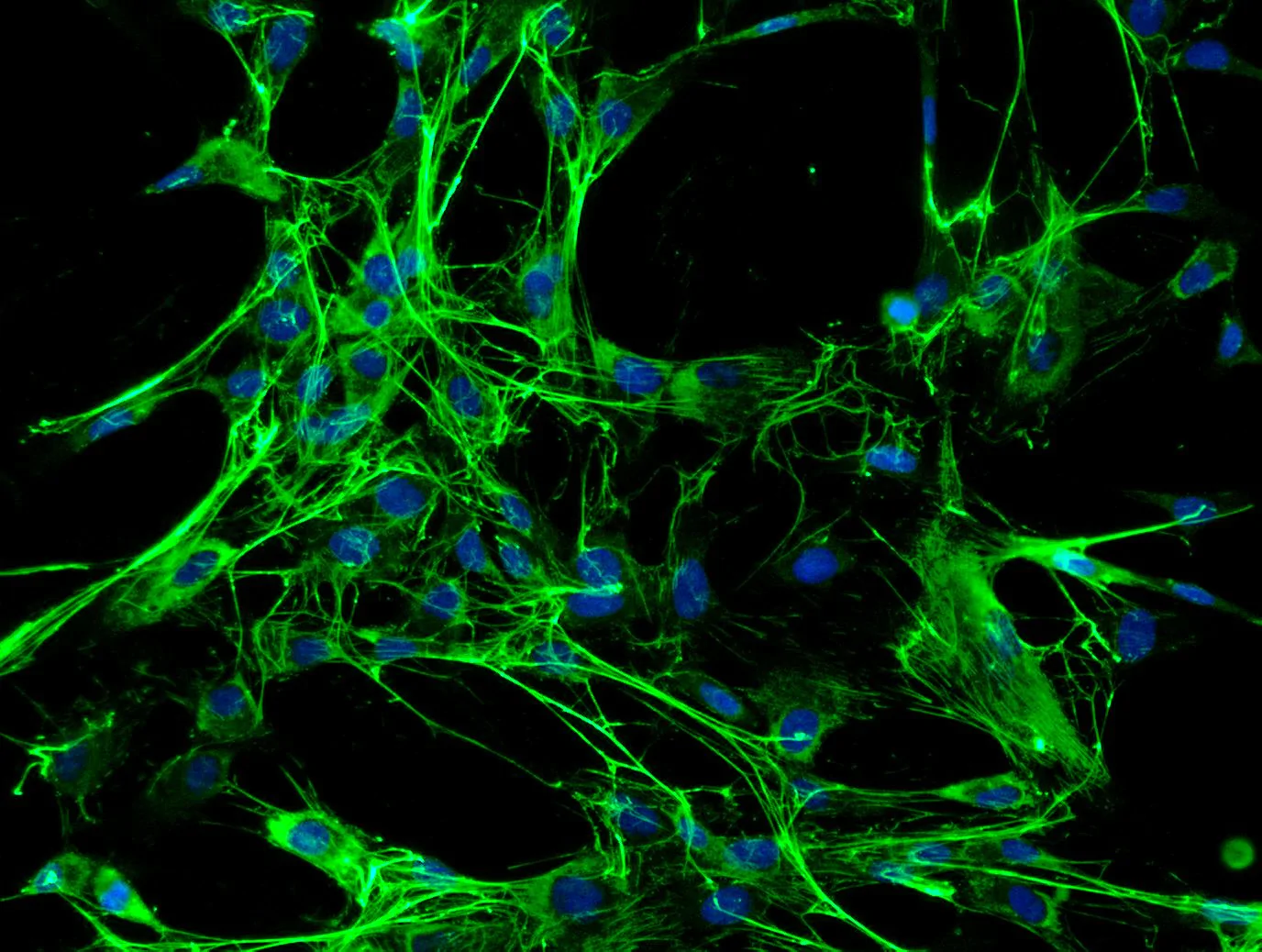
RabPF from ScienCell Research Laboratories are isolated from rabbit lung. RabPF are cryopreserved at passage one and delivered frozen. Each vial contains >5 x 10^5 cells in 1 ml volume.
The most abundant cell type in the lung interstitium is the fibroblast. These fibroblasts resemble ordinary fibroblasts, but also possess some distinguishing features such as long, branching processes and gap junctions. Pulmonary fibroblasts function to produce type III collagen, elastin, and proteoglycans of the extracellular matrix of the alveolar septa. They play an important role in the repair and remodeling processes following tissue damage. The controlled accumulation of fibroblasts to sites of inflammation is crucial to effective tissue repair after injury. An inadequate or an excessive accumulation of fibroblasts can result in abnormal tissue function. For example, excess proliferation of fibroblasts contributes to adventitial thickening observed during the development of hypoxia-induced pulmonary hypertension. Rabbit pulmonary fibroblasts (RabPF) are a useful model for elucidating the mechanisms of pulmonary disease.
RabPF from ScienCell Research Laboratories are isolated from rabbit lung. RabPF are cryopreserved at passage one and delivered frozen. Each vial contains >5 x 10^5 cells in 1 ml volume. RabPF are characterized by immunofluorescence with antibody specific to fibronectin. RabPF are negative for mycoplasma, bacteria, yeast, and fungi. RabPF are guaranteed to further expand for 10 population doublings under the conditions provided by ScienCell Research Laboratories.
Recommended Medium -
It is recommended to use Fibroblast Medium (FM, Cat. #2301) for culturing RabPF in vitro .