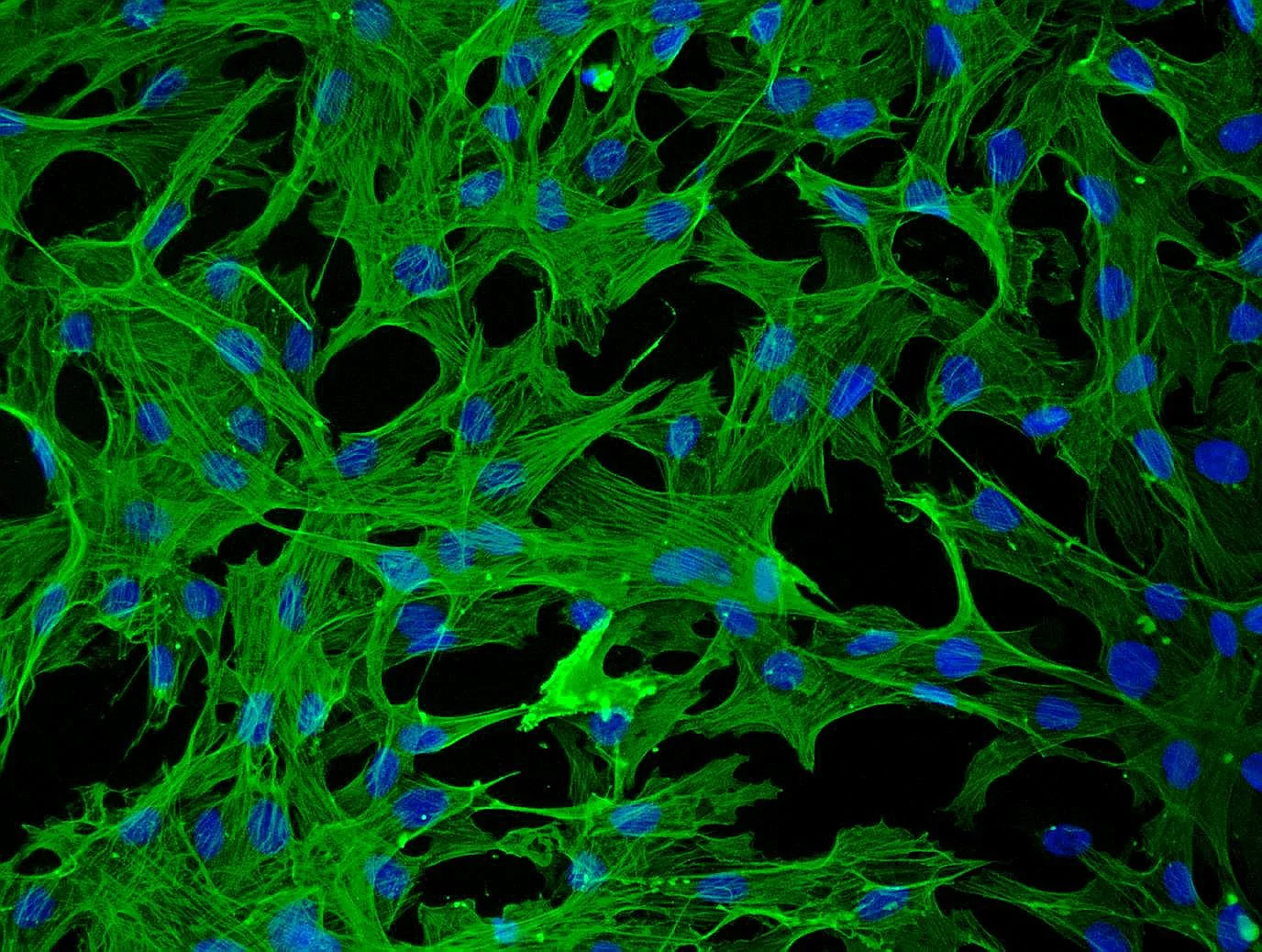
RabHSteC from ScienCell Research Laboratories are isolated from rabbit liver. RabHSteC are cryopreserved at passage one and delivered frozen. Each vial contains >5 x 10^5 cells in 1 ml volume.
Hepatic stellate cells (HSteC) are mesenchymal cells that are located between sinusoidal endothelial cells and hepatocytes in the space of Disse or perisinusoidal space and represent about 5-10% of cells in the liver. HSteC play a critical role in liver homeostasis and perform a diverse set of functions. In a normal healthy liver, stellate cells are quiescent and store vitamin A droplets. Additionally, stellate cells are involved in vasoregulation, monitoring extracellular matrix deposition, and the production of factors that stimulate hepatocyte regeneration. In response to liver damage, stellate cells receive signals from hepatocytes, hepatic sinusoidal endothelial cells, and immune cells to activate. Once given the signal to activate, HSteC transdifferentiate into myofibroblasts and produce extracellular matrix (ECM), such as collagen type I and III. Paradoxically, while stellate cells play a key role in liver repair and regeneration, they also promote the progression of liver disease by their continuous deposition of ECM. Understanding the role of HSteC in liver fibrosis will help drive the development of novel therapeutics for liver disease.
RabHSteC from ScienCell Research Laboratories are isolated from rabbit liver. RabHSteC are cryopreserved at passage one and delivered frozen. Each vial contains >5 x 10^5 cells in 1 ml volume. RabHSteC are characterized by immunofluorescence with antibodies specific to α-smooth muscle actin. RabHSteC are negative for mycoplasma, bacteria, yeast, and fungi. RabHSteC are guaranteed to further expand for 10 population doublings under the conditions provided by ScienCell Research Laboratories.
Recommended Medium -
It is recommended to use
Stellate Cell Medium (SteCM, Cat. #5301) for culturing RabHSteC in vitro .