
Fluoppi (Fluorescent based technology detecting Protein-Protein Interaction (PPI)) is a novel technology to detect PPI in living cells with a high signal to noise ratio.
FUCCI: Fluorescent Ubiquitination-based Cell Cycle Indicator
FUCCI (Fluorescent Ubiquitination-based Cell Cycle Indicator) is a set of fluorescent probes which enables the visualisation of cell cycle progression in living cells.
LC3

The mammalian homologue of Atg8, LC3, is the most actively studied and frequently used as a mammalian autophagy marker.
IL-18 (Interleukin-18)
IL-18 Function Interleukin 18 (IL-18), also known as INFγ-inducing factor, is a cytokine that plays key roles in many physiological functions including immunology and metabolic processing. It serves as a biomarker or therapeutic target for a wide array of disease
In vivo Grade Isotype Control Antibodies
CrownVivo™ antibodies are functional grade isotype controls, manufactured specifically for in vivo animal studies.
MESACUP™ anti-MDA5 TEST
Biomarker of dermatomyositis with rapidly progressive interstitial lung disease Clinically amyopathic dermatomyositis (CADM), dermatomyositis without muscle weakness, is associated with elevated rates of rapidly progressive interstitial lung disease (RP-ILD), which is extremely resistant to treatment. The prognosis is poor after
TCR Tetramers
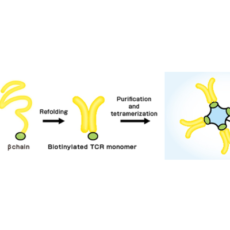
A TCR Tetramer is a reagent prepared by tetramerising biotinylated antigen-specific TCRs with the help of phycobiliprotein-labelled streptavidin.
HLA-E Non-classical MHC Tetramers
Non-classical Major Histocompatibility Complex (MHC) molecules are non-polymorphic proteins implicated in both innate and adaptive immune responses.1,2 While classical MHCs present antigens to CD8+/CD4+ cells for further immune processing, non-classical MHCs also mediate activation or inhibition in natural killer (NK) cells.3 MBL
CD1d
CD1d molecules are non-polymorphic MHC class I-like proteins. These are a type of non-classical MHCs. They present phospholipid and glycosphingolipid antigens to invariant Natural Killer T (iNKT) cells, a subset of CD1d-restricted T cells. This axis is involved in the
MHC Class II Tetramers
T cell receptors (TCRs) expressed on the surface of T cells specifically recognise and bind to complexes of major histocompatibility complex (MHC) molecules and peptide fragments. CD4+ T cells, which include helper and regulatory T cells, recognise complexes of MHC class