immunAware’s stability assay measures dissociation of pMHC complexes at 37°C. Distinguish between peptides that support formation of stable or unstable pMHC complexes.
State-of-the art pMHC stability assessment


immunAware’s stability assay measures dissociation of pMHC complexes at 37°C. Distinguish between peptides that support formation of stable or unstable pMHC complexes.
With immunAware’s peptide receptive easYmers®, you can produce pMHC complexes tailored for your project, in your own lab!
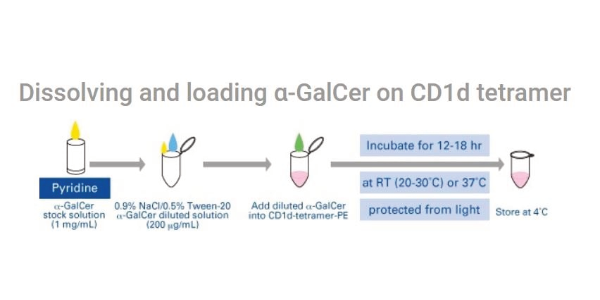
CD1d, non-classical MHC molecules, present phospholipid & glycosphingolipid antigens to iNKT cells. MBL tetramers help measure CD1d positive NKT cells
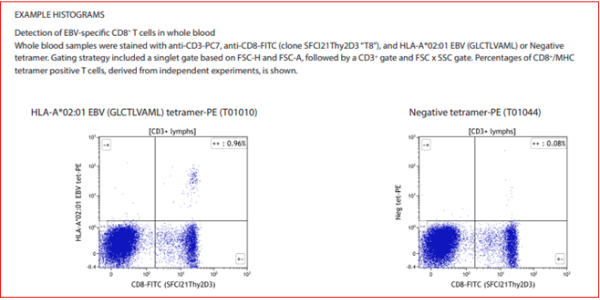
Negative controls aid precision of immune response monitoring. For HLA-A*02:01 alleles, MBLI offers a “Negative Tetramer” in BV421, PE or APC.

ProSci offers reagents that can be used to study the actions of multiple immune checkpoint proteins such as CTLA-4, PD-1, & its ligands PD-L1 & PD-L2.
MBL International offers CD1d tetramers prepared by tetramerisation of complexes of CD1d and β2m by PE- or APC- labelled streptavidin.
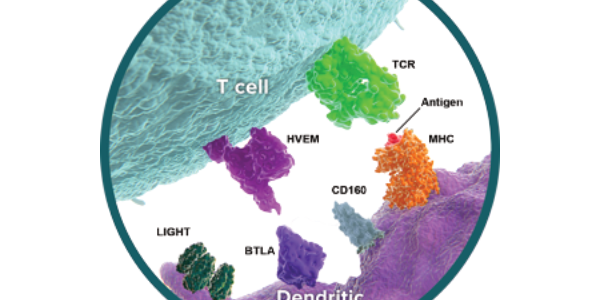
The checkpoint receptors/ligands system HVEM, LIGHT, CD160 and BTLA (CD272) is part of a complex network of overlapping receptor interactions.
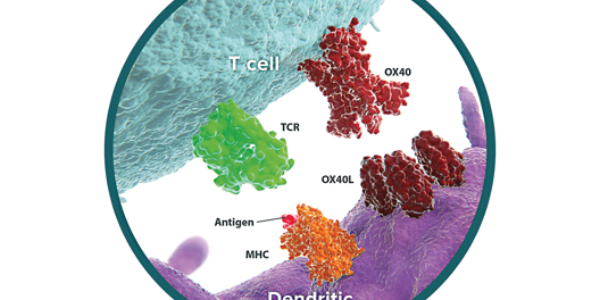
OX40 is an activating receptor expressed on the surface of activated cytotoxic T cells & Tregs. OX40 activates & amplifies T cell responses.
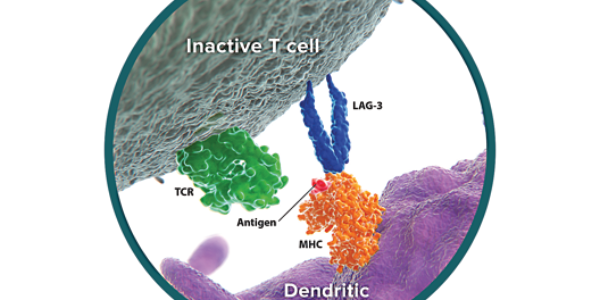
Dual inhibition of LAG-3 and other checkpoint pathways may synergistically increase T cell antitumour activity.
![CTLA-4 [CD152] – CD80 – CD86 – CD28 Network](https://www.caltagmedsystems.co.uk/information/wp-content/uploads/cd28-600x300.png "CTLA-4 [CD152] – CD80 – CD86 – CD28 Network")
Targeting CTLA-4 restores immune response by more accumulation, function & survival of T cells, depletion of Tregs & better antitumour response.